

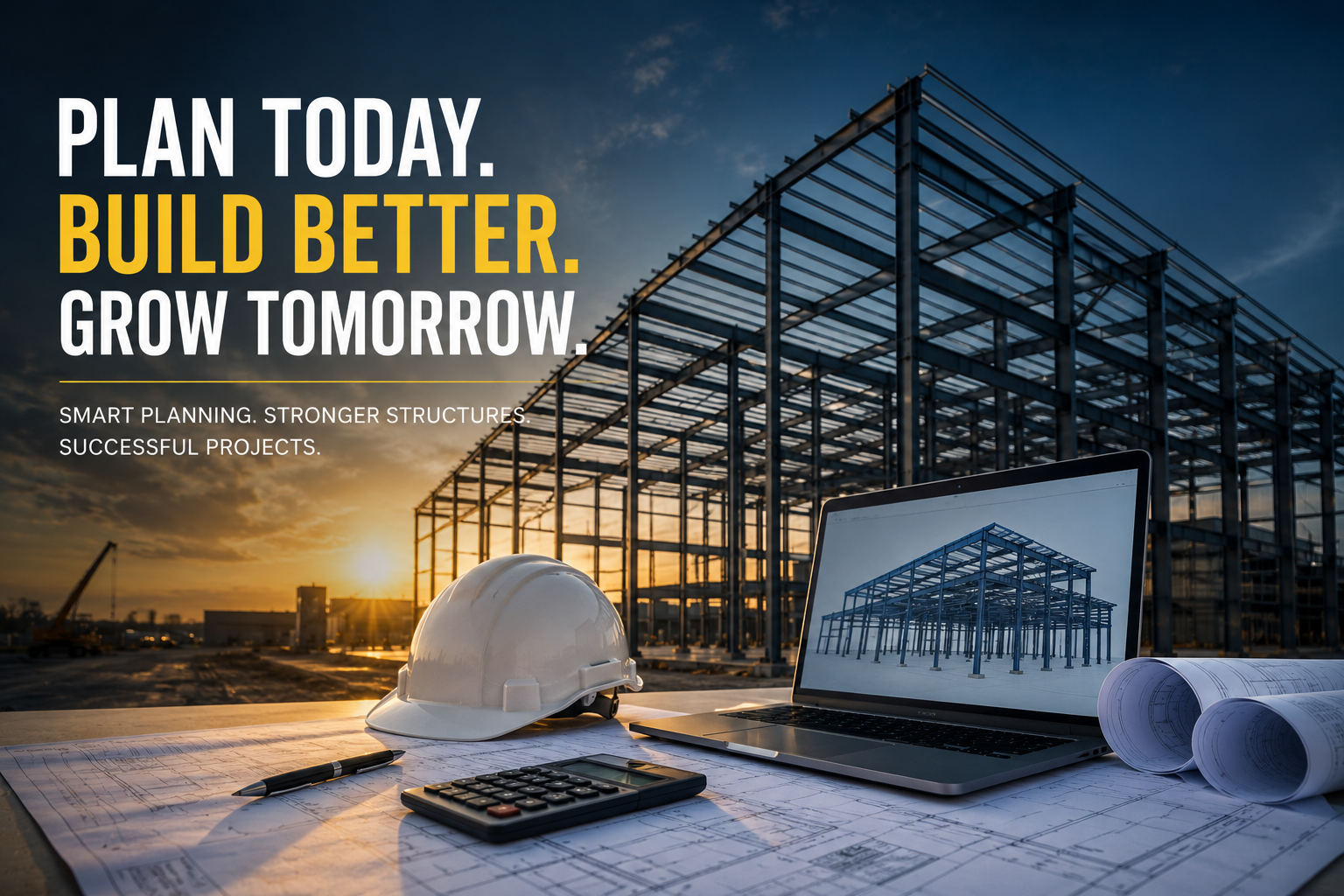
Why Industrial Construction Planning Matters Before Starting a Project
Many industrial projects face delays, budget issues, or operational problems not because of construction quality, but because of poor planning before the project even begins. Whether it is a warehouse, factory, logistics centre, or industrial shed, proper planning plays a major role in the long-term success of the project. Modern industrial construction is not only about building structures, but it is also about creating infrastructure that supports smooth operations, future expansion, and business efficiency. At Tamim Industries, we work with businesses to develop industrial infrastructure solutions that focus on practical planning, strong execution, and long-term operational performance.
Proper Planning Reduces Future Problems
Without proper planning, industries often face issues like:
- Limited operational space
- Poor material movement
- Expansion difficulties
- Workflow interruptions
- Increased maintenance costs
A well-planned industrial building helps businesses avoid these challenges from the beginning.
Understanding Operational Requirements is Important
Every industry operates differently. A manufacturing unit may require heavy machinery space, while a warehouse may need better logistics movement and storage planning.
Industrial construction planning should consider:
- Workflow management
- Storage requirements
- Vehicle movement
- Machinery placement
- Safety and operational access
This creates a more efficient working environment.
Planning Helps Control Project Costs
Unexpected modifications during construction often increase expenses and delay project completion.
Proper planning helps businesses:
- Optimise material usage
- Reduce construction delays
- Improve labour efficiency
- Avoid unnecessary redesign work
This leads to better budget management and smoother execution.
Future Expansion Should Be Considered Early
Businesses grow over time, and industrial infrastructure should support that growth. Modern PEB structures and steel buildings allow easier future expansion when planned correctly from the beginning. This flexibility helps businesses scale operations without major reconstruction work.
Strong Infrastructure Supports Long-Term Operations
Industrial buildings are long-term investments.
Properly planned infrastructure improves:
- Operational efficiency
- Structural durability
- Safety standards
- Productivity
- Business continuity
This creates better long-term value for industries.
Conclusion
Industrial construction planning is one of the most important steps before starting any warehouse, factory, or industrial building project. Proper planning helps businesses save time, reduce future problems, and build infrastructure that supports long-term growth. For industrial shed construction and PEB solutions in Raipur and Chhattisgarh, Tamim Industries provides dependable industrial infrastructure services designed for modern business requirements.